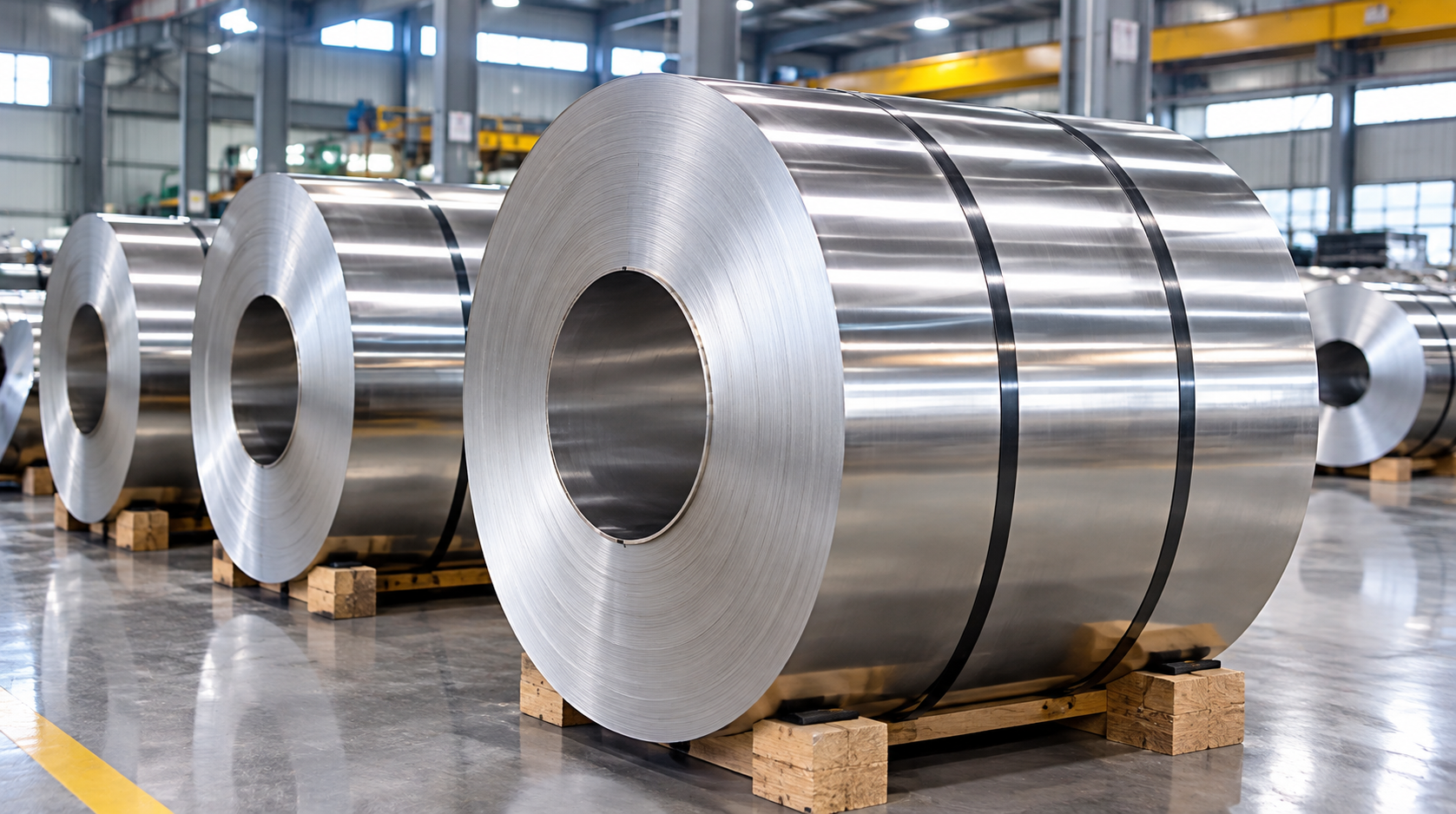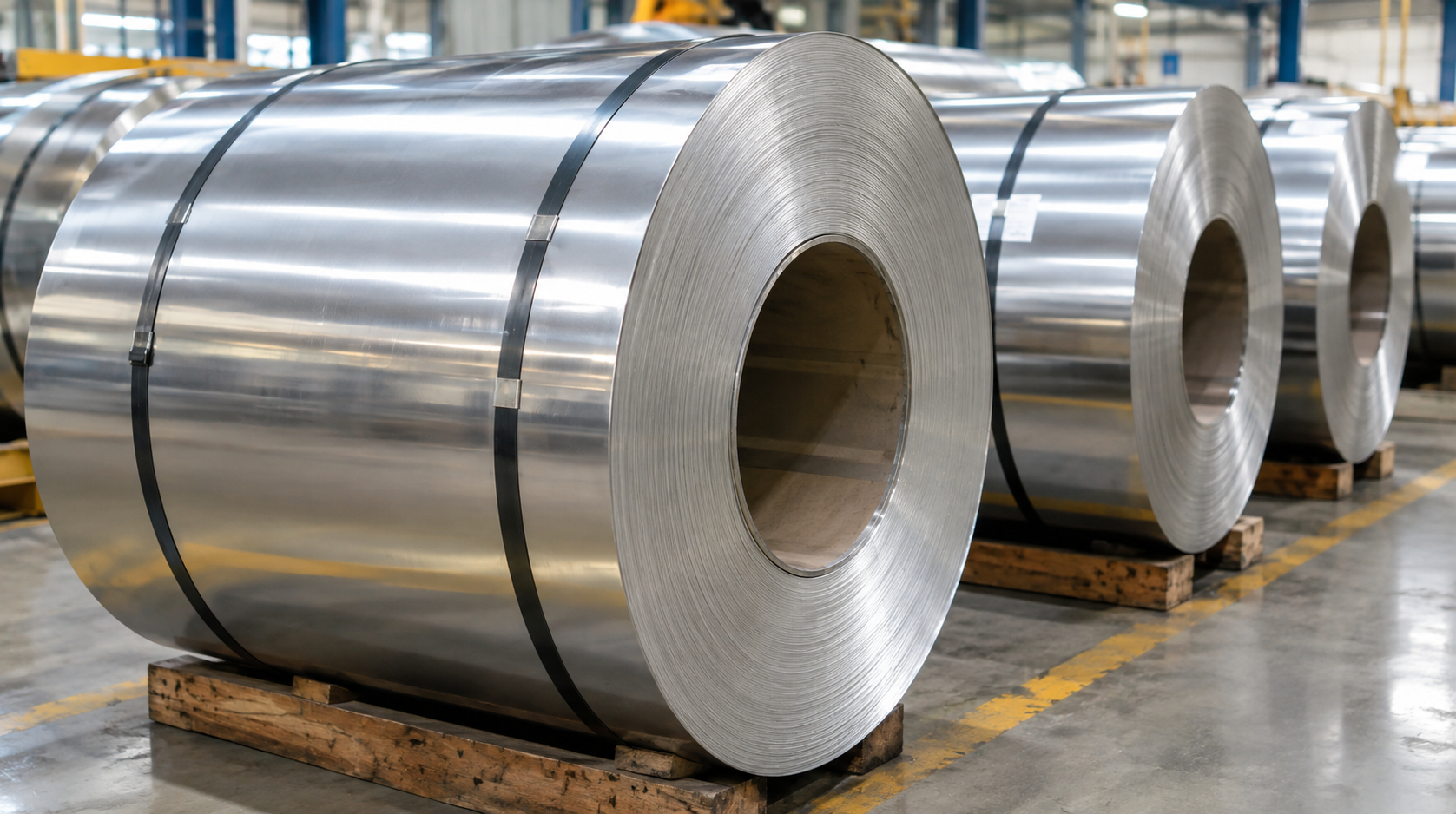
Manufacturers cutting, shaping and welding stainless steel every day need raw material that keeps pace with production schedules. SS 304 coils solve that problem by arriving in continuous rolled form, ready to be slit, blanked or pressed into whatever shape a job calls for. The coil format reduces handling time between processes, as operators can feed material directly into slitting lines, press brakes or roll formers without having to move individual sheets. Add to that the good balance of corrosion resistance, formability, weldability and mechanical strength of the grade and it is clear why SS 304 coils for fabrication applications continue to be a standard choice for workshops producing everything from brackets to architectural panels.
What Are SS 304 Coils?
SS 304 is an austenitic stainless steel grade built around 18% chromium and 8% nickel, a composition that gives it its corrosion resistance and non-magnetic structure in the annealed condition. Coils are supplied in continuous rolled lengths, which mills and processors then cut, slit or re-coil into the widths and thicknesses a fabricator specifies. Surface finish varies by intended use, and thickness runs across a wide range to suit different load and forming requirements. For manufacturers running repeated batches, coil form removes the need to reorder individual sheets for every production cycle.
- Contains chromium and nickel, giving the grade its corrosion resistance and austenitic structure.
- Supplied as a continuous rolled coil that gets processed into sheets, strips or blanks.
- Available in finishes ranging from mill finish to polished surfaces for visible parts.
- Offered across multiple thickness ranges to match different fabrication needs.
- Suits high-volume production where consistent material supply matters more than one-off sheet orders.
Why SS 304 Coils Are Suitable for Fabrication
Fabrication shops are concerned about how a material behaves under a press brake, a welding torch, or a slitting blade. SS 304 does a good job in each of these stages.
- Formability allows the material to be bent, drawn or shaped into brackets, panels and enclosures without cracking.
- Weldability supports common processes like TIG and MIG welding when the correct filler and technique are followed.
- Corrosion resistance protects components exposed to moisture, humidity and typical atmospheric conditions.
- Strength and durability keep fabricated parts stable under load in demanding operating environments.
- Surface finish options cover both hidden structural parts and visible architectural or decorative components.
- Ease of processing lets coils be slit, cut, stamped or rolled to match exact component dimensions.
Role of SS 304 Coils in Forming Processes
SS 304 coil material is cut to size and then goes through a number of forming routes depending on the final component geometry.
- Bending and press forming shape flat blanks into brackets, channels and structural sections.
- Roll forming produces long, consistent profiles used in panels, trims and support members.
- Stamping and pressing create repeatable component shapes for high-volume production runs.
- Deep drawing forms cup-shaped or contoured parts where the design geometry allows it.
- Cutting and blanking prepare flat pieces ahead of any secondary forming step.
- Slitting narrows master coils into strip widths matched to specific production lines.
Getting a clean result from any of these methods depends on matching thickness, temper and tooling to the bend radius required, since mismatched settings lead to surface marking or dimensional drift.
Stainless Steel Components Made from SS 304 Coils
Processed coil material ends up in a wide range of finished parts across industries.
- Fabricated panels used in cladding, partitions and equipment housings.
- Enclosures and covers that protect internal machinery or electrical components.
- Brackets and supports for structural and equipment mounting applications.
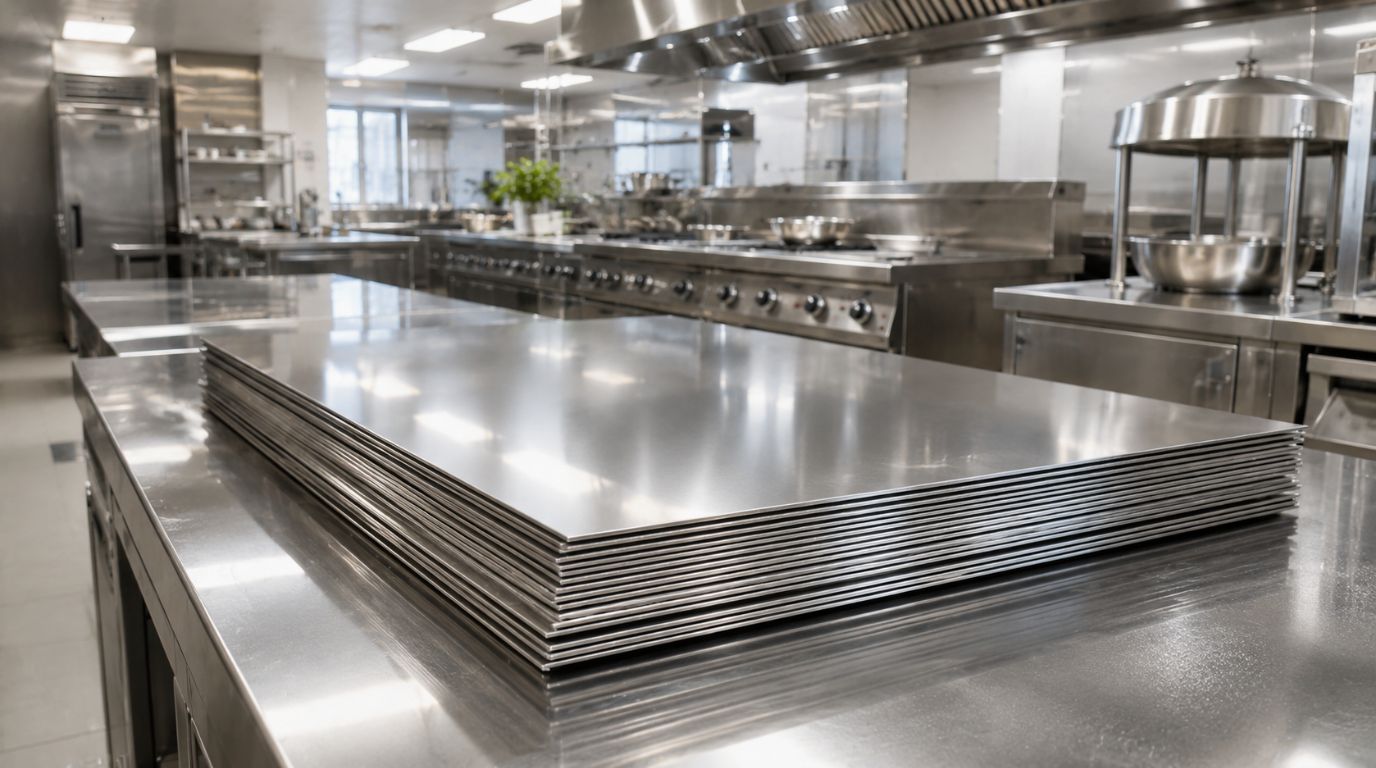
- Kitchen and food-processing components where hygiene and corrosion resistance matter.
- Automotive and general engineering parts requiring formed metal sections.
- Decorative and architectural components finished for visible installation.
- Tanks and formed vessels where SS 304’s corrosion resistance suits the application.
Factors to Consider When Selecting SS 304 Coils
Choosing the right coil specification is critical to avoid rework and material loss down the production line.
- Coil thickness and width should match the tooling and forming method planned for the job.
- Surface finish needs to suit whether the component stays hidden or remains visible.
- The material specification and grade must be compatible to the mechanical and environmental requirements of the application.
- The required forming operation determines what temper and thickness tolerance to order.
- Component dimensions should be checked against the achievable bend radius and blank size.
- Welding and fabrication requirements affect filler selection and joint design.
- The operating environment influences whether standard 304 or an alternate finish is appropriate.
- Depending on the order, the quantity needed and the way the product will be processed, a slit coil or master coil will be better.
Coil specification should always match the intended forming and fabrication process rather than being chosen on availability alone.
Conclusion
SS 304 coils give fabricators a practical starting point for turning raw material into finished stainless steel components, combining formability, weldability, corrosion resistance and durability in one product. From slitting and blanking through bending, roll forming and stamping, coil stock adapts to whatever process a component design calls for. Getting the right outcome still depends on selecting the correct thickness, finish, specification and material condition before the first cut is made, since that decision shapes everything that follows in production.