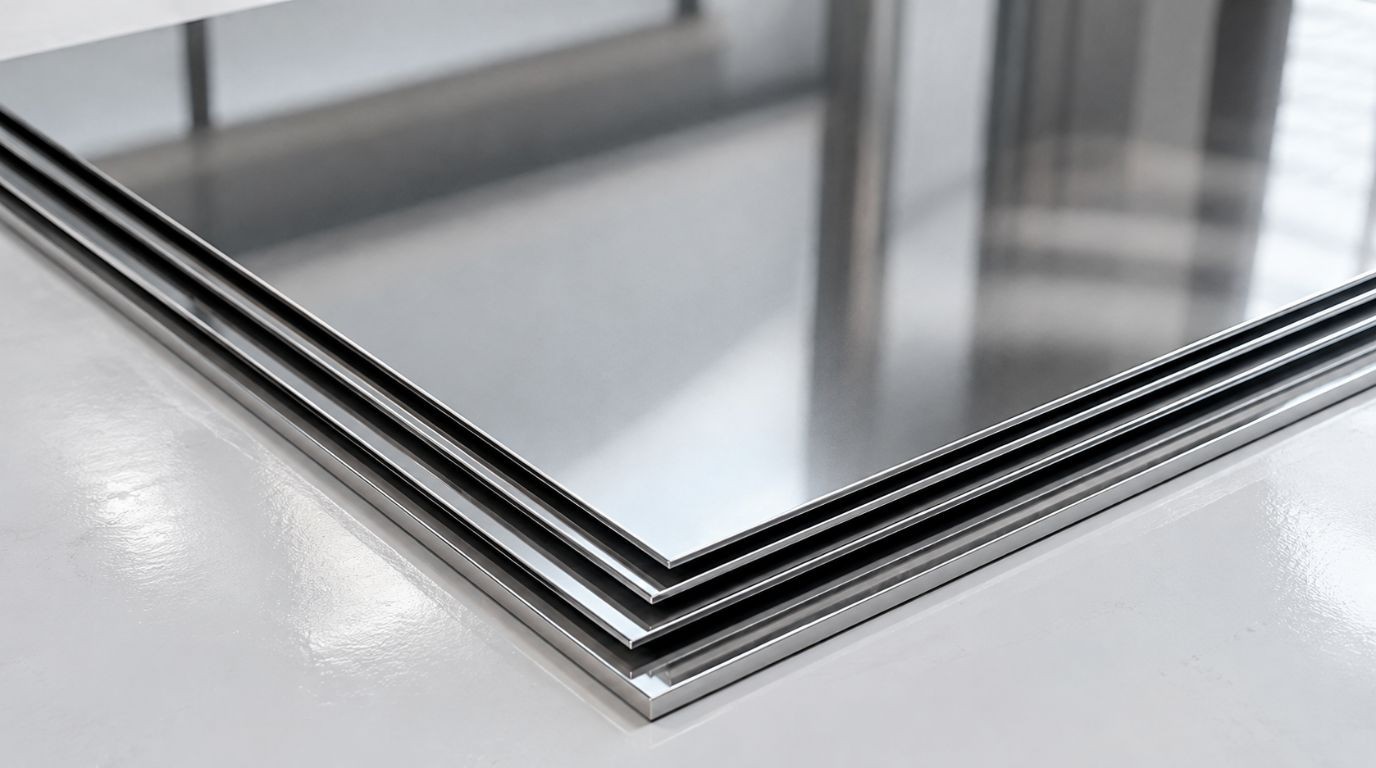
Stainless steel has moved well beyond kitchens and factory floors. Architects and interior designers now specify it for lobbies, feature walls, and lift interiors where colour and finish matter as much as strength. PVD coating enables this change: a thin decorative layer is applied to the surface of the steel without affecting the metal’s structural integrity. The result is a single sheet material that offers color options, distinctive finishes and long-term durability. For architects sourcing PVD coated stainless steel sheets for interior design, this combination solves a problem that plain steel or painted panels cannot: how to get consistent, premium colour across large surface areas that will face daily wear.
What Are PVD Coated Stainless Steel Sheets?
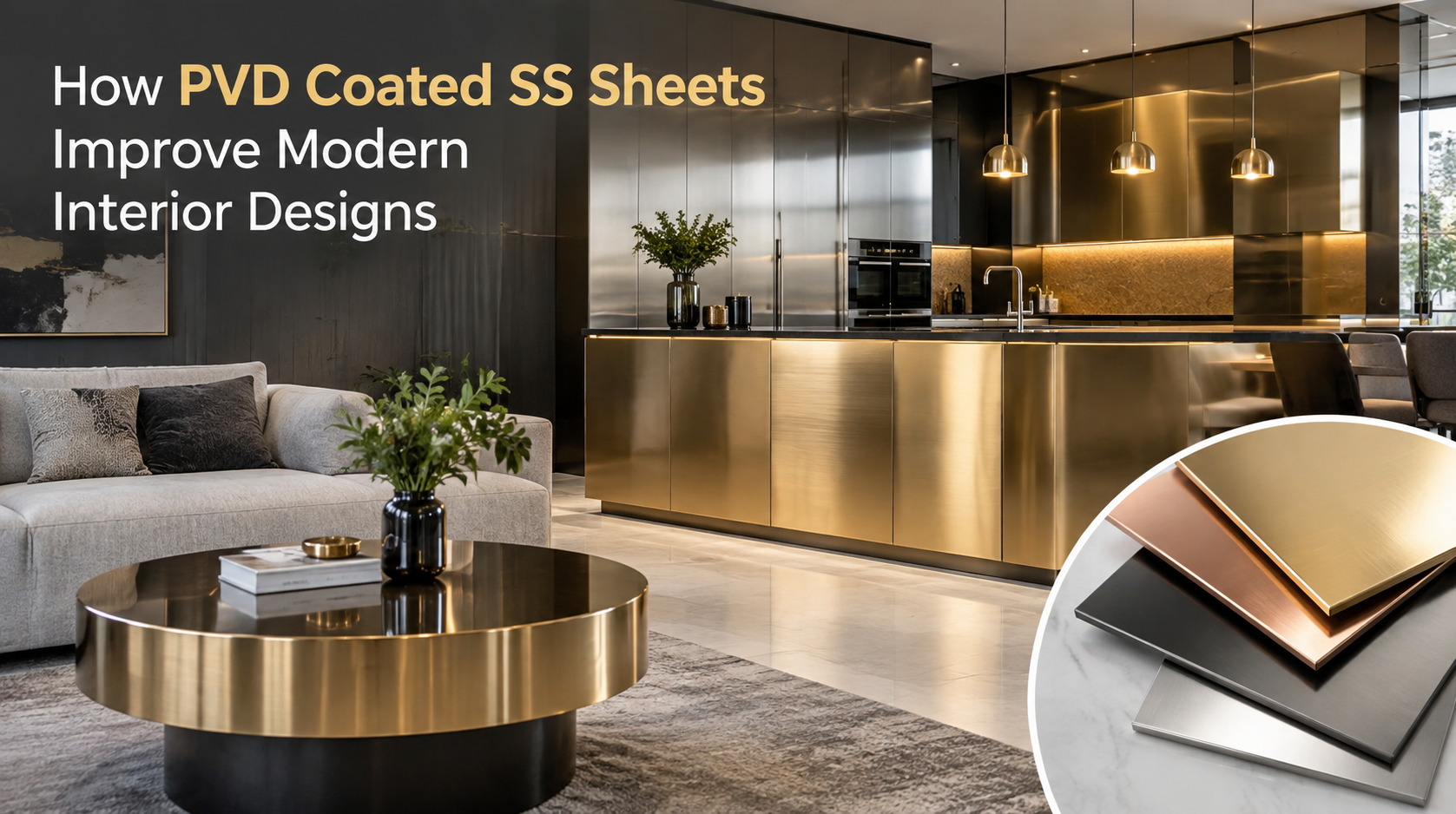
PVD stands for Physical Vapour Deposition, a process where metal vapour is deposited onto a stainless steel surface inside a vacuum chamber. The vapour bonds to the steel at a molecular level, forming a coating that is measured in microns yet resists peeling, chipping, and colour fade far better than paint or lacquer. Common finishes include gold, black, bronze, rose gold, copper, and blue, each achievable in mirror, brushed, matte, or textured surface options. A gold mirror finish suits a hotel reception that wants visual drama, while a matte black brushed finish fits a minimalist office lobby. Because the coating sits on top of standard-grade stainless steel, designers get decorative flexibility without giving up the base metal’s mechanical properties.
How PVD Coated Stainless Steel Sheets Improve Modern Interior Designs
The real value of PVD coating shows up in what it lets designers do that plain steel cannot.
- Wide range of colours and finishes lets designers match a specific brand palette or mood without changing the base material at all.
- Modern visual appeal comes from metallic surfaces that read as clean, premium, and current rather than dated or industrial.
- Consistent finish across every sheet matters when a project needs uniform panels across a large wall, lift bank, or corridor.
- Design versatility means the same product range supports minimalist, luxury, industrial, and contemporary interior concepts equally well.
- Reflective and decorative effects add depth to a space, with mirror finishes bouncing light and matte finishes softening it.
- Custom design possibilities open up through etched patterns, embossed textures, and combined finishes selected for a specific brief.
This section stays focused on what these finishes do for the look and feel of a room.
Interior Applications of PVD Coated Stainless Steel Sheets
Designers use these sheets across a wide set of interior surfaces, each with its own visual role.
- Wall cladding and feature walls turn a plain vertical surface into a focal point using colour and reflectivity.
- Lift interiors and elevator panels benefit from scratch-conscious finishes that hold their appearance under constant hand contact.
- Decorative partitions divide open-plan spaces while keeping sightlines and light flow intact.
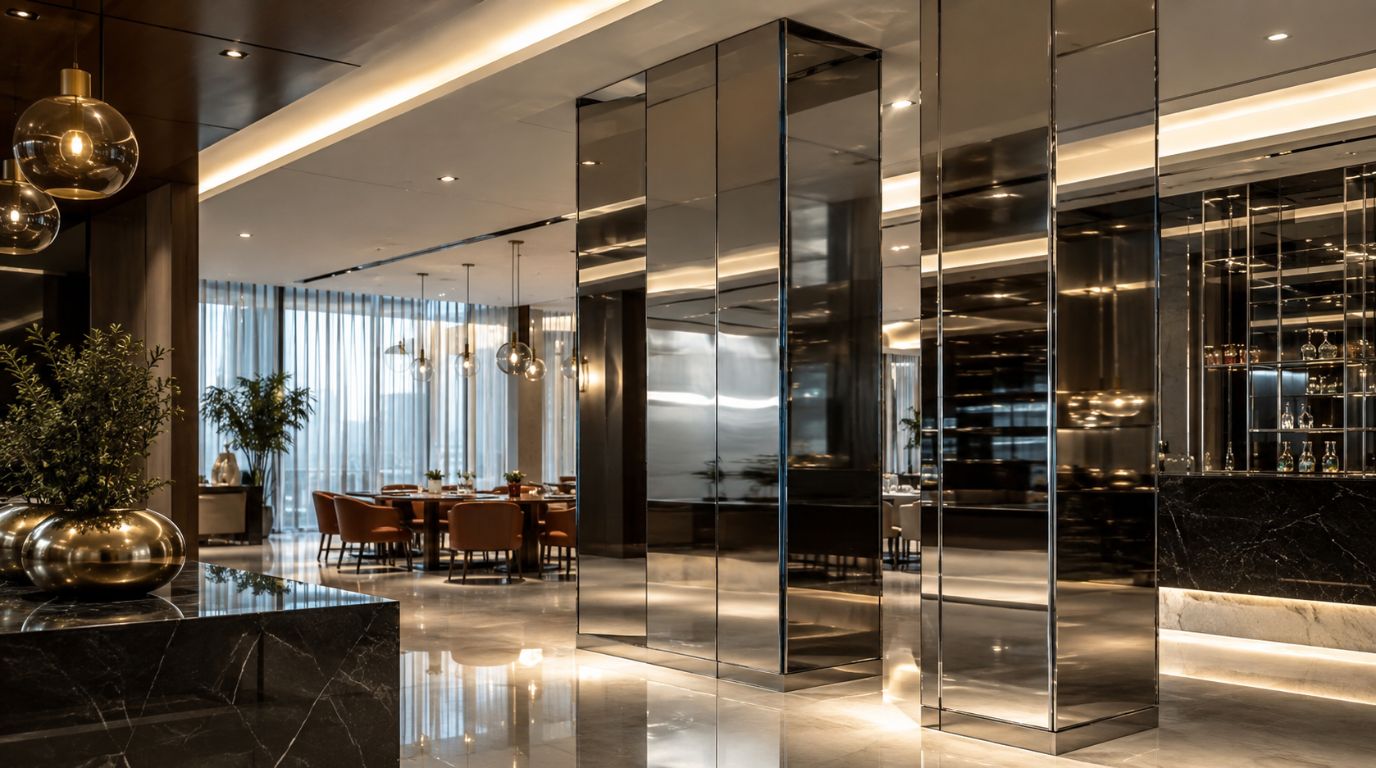
- Column coverings wrap structural elements in a finish that matches the surrounding design scheme.
- Reception and lobby features create a strong first impression through bold metallic tones.
- Hotel and restaurant interiors pair warm gold or bronze finishes with ambient lighting for a layered look.
- Furniture and cabinetry accents add metallic detailing to joinery without full metal fabrication.
- Ceiling or decorative architectural elements introduce texture and reflection overhead, where flat finishes often go unnoticed.
The right finish connects each application with nearby materials and changing daylight across the space.
Why Finish Selection Matters in Interior Design
Choosing a PVD finish is a design decision. The wrong choice can clash with a room’s palette or wash out under certain lighting, while the right one pulls a whole scheme together.
- Interior colour palette should guide finish choice so the steel complements rather than competes with existing tones.
- Lighting conditions change how a finish reads, since warm lighting intensifies gold and bronze tones while cool lighting favours silver and black.
- Glossy vs. matte appearance affects how much a surface reflects its surroundings, which matters in busy or visually loud spaces.
- Brushed, mirror, or patterned surfaces each create a different texture story on the same base colour.
- Required visual contrast determines whether a finish should stand out as a feature or recede into the background.
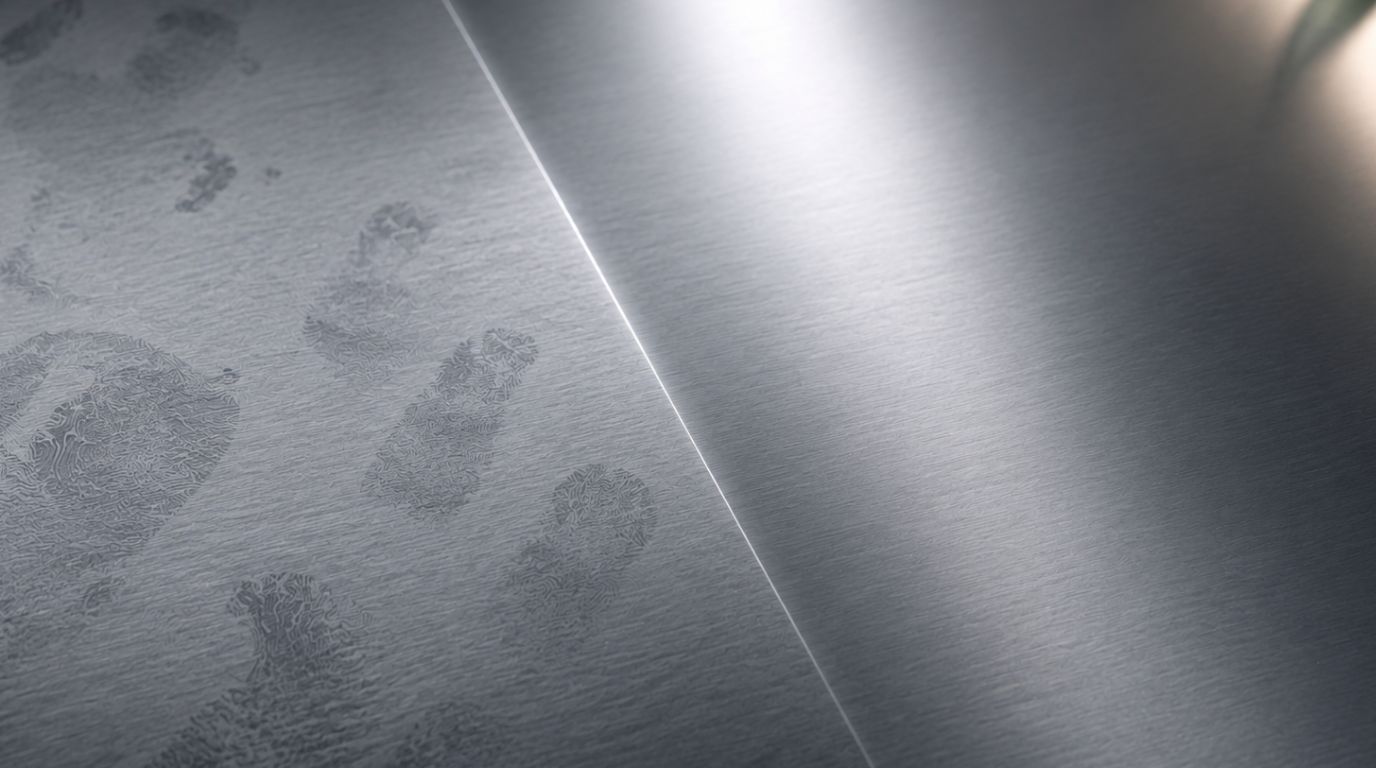
- Maintenance expectations vary by finish, since mirror surfaces show fingerprints more readily than brushed or matte options.
- Compatibility with other materials such as glass, wood, stone, and tiles keeps the overall material palette coherent.
Keeping these factors in view during specification avoids a mismatch between the sample swatch and the finished space.
PVD Coating and Long-Term Interior Appearance
If a PVD coating is applied properly, stainless steel will maintain its appearance for years, especially indoors where the humidity can be controlled and the use is moderate. It makes it more resistant to everyday wear, minor scratches and color fading as the finish bonds directly with the steel. But durability depends on coating quality, type of finish, use, cleaning and maintenance. Ceiling panels that are never touched will last longer than frequently used areas like lift interiors. PVD coatings are therefore durable but not scratch proof and realistic expectations for maintenance are essential at specification.
Conclusion
PVD coated stainless steel sheets give interior designers something plain steel cannot: decorative flexibility layered onto a metal known for its structural reliability. Gold, black, bronze, and rose gold finishes, in mirror, matte, or brushed textures, let a single material range serve minimalist offices, luxury hotel lobbies, and contemporary retail spaces alike. Getting the result right comes down to matching colour, surface finish, and sheet specification to the space’s lighting, palette, and material mix from the outset, rather than treating the finish as an afterthought once the rest of the interior is set.