Stainless Steel 430 carries 16-18% chromium and no nickel, which explains why food processing plants and commercial kitchens across the Gulf and MENA specify it consistently. Grade 430 belongs to the ferritic stainless steel family, with stable indoor corrosion resistance and material cost roughly 20-25% lower than 304 at equivalent thickness. For equipment builders needing corrosion-resistant, hygienic, and affordable plate material, SS 430 addresses all three.
What are Stainless Steel 430 Plates?
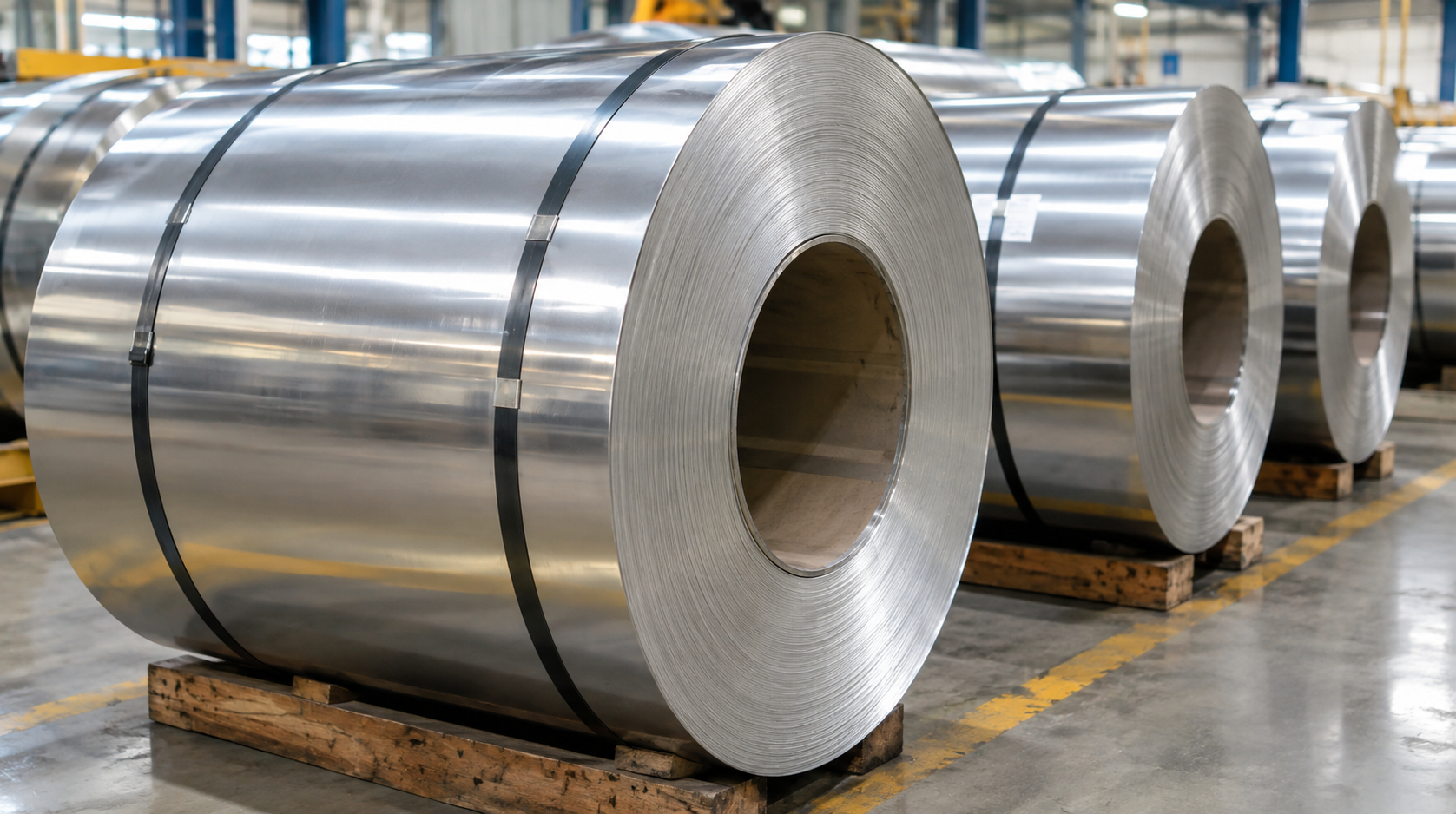
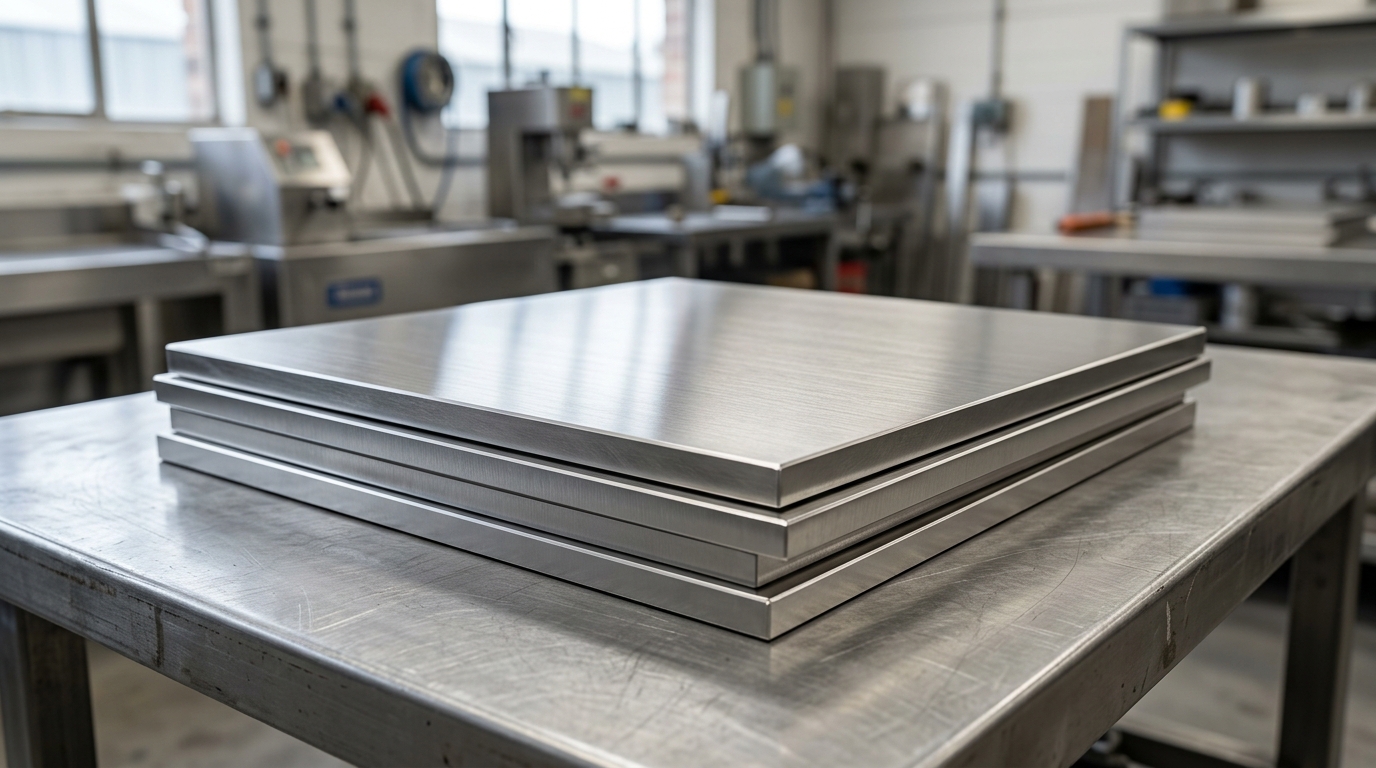
ASTM A240 Stainless Steel 430 plates cover ferritic chromium stainless steel for general corrosion-resistant service. The specification sets chromium between 16.0% and 18.0%, carbon capped at 0.12%, and no required nickel. Tensile strength runs 450 MPa minimum, yield strength 205 MPa minimum, and elongation 22% minimum, making the grade practical for formed, welded, and pressed kitchen components.
Ferriticity gives SS 430 two properties that austenitic grades lack: it is magnetic, and it resists stress corrosion cracking. Magnetic behavior means compatibility with induction-based cooking equipment. Surface finishes range from 2B (smooth matte) to BA (bright annealed) and No. 4 (brushed), with No. 4 and 2B covering most food-contact applications.
Key Properties of SS 430 Plates for Food Industry Applications
Corrosion Resistance
Grade 430 resists oxidation up to 870°C in continuous service. In food processing conditions, the corrosive agents are dilute organic acids, moisture, and cleaning chemicals rather than strong mineral acids. Tomato sauces, dairy cleaning solutions, and mild acidic rinses fall within its resistance envelope. Prolonged exposure to concentrated chloride solutions or coastal outdoor environments falls outside its practical range; those conditions require 316.
Hygienic Surface Properties
A 2B or No. 4 finish on SS 430 plate achieves a surface Ra value below 0.8 microns, meeting hygiene thresholds set by NSF and EN 1672-2 for food-contact surfaces. Smooth surfaces at that roughness level do not harbor bacterial colonies in micro-crevices. Cleaning with sodium hypochlorite or quaternary ammonium compounds removes residues without corroding the surface, which matters for operations running two or three sanitization cycles daily under HACCP protocols.
Heat Resistance
SS 430 handles the temperature span from refrigeration at −18°C to cooking surface temperatures above 300°C without scaling or surface degradation. Food warmers, bain-marie bases, oven liners, and cooking equipment shrouds benefit from oxidation resistance sustained to 870°C continuously.
Fabrication Characteristics
Formability suits simple bending, rolling, and pressing. Deep drawing requires slower tool speeds and wider die radii than 304. TIG welding with low heat input minimizes grain growth in the heat-affected zone, and post-weld annealing restores corrosion resistance. Fabricators producing sinks, counters, and equipment panels work with 430 across thicknesses from 0.8 mm to 6 mm on standard tooling.
Cost Advantage
Nickel trades at roughly three to four times the price of chromium per tone. Removing nickel from the alloy directly cuts raw material cost. SS 430 typically prices 20–25% below SS 304 in GCC procurement, and for a contractor specifying 300 square meters of kitchen cladding, that differential represents a material saving worth accounting for at the project budget stage.
Stainless Steel 430 Plates in Food Processing Equipment
Processing plants use SS 430 plates across a broad set of components. Food preparation tables with 1.5 mm or 2 mm 430 plate tops handle cutting, sorting, and assembly tasks across meat, produce, and bakery lines. Storage racks and shelving frames hold product from −10°C cold rooms to ambient warehouse conditions. Conveyor system side panels resist moisture and mild detergent contact in continuous wash-down environments.
Bakery equipment uses 430 extensively, with proofer cabinet interiors, oven deck liners, and dough divider frames running in dry-heat conditions where oxidation resistance suits the application. Refrigeration panel skins, commercial sink bodies, and dishwasher cabinet panels complete the specification across Gulf hospitality procurement.
SS 430 Plates for Catering Equipment Applications
Commercial kitchens demand materials that look clean, clean easily, and stay structurally sound through daily use. Catering counters and serving stations built from 1.2 mm or 1.5 mm 430 sheet carry gastronome containers and hot plate loads without deflection. Restaurant pass-through shelves, food display unit bases, and hotplate surrounds benefit from the grade’s aesthetic finish and heat resistance.
Wall cladding in professional kitchens typically uses 0.8 mm or 1.0 mm 430 plate with a No. 4 finish applied to masonry or stud framing, producing a seamless, washable surface that satisfies municipal food hygiene inspections. Exhaust hoods and canopy frames handle grease-laden air, condensate, and temperature cycles without surface deterioration. Kitchen range side panels, oven door inners, and steamer cabinet walls all specify 430 for hygiene, heat resistance, and cost control.
Stainless Steel 430 vs Other Grades
In professional kitchens the wall cladding is generally 0.8 mm or 1.0 mm 430 plate with a No. 4 finish on masonry or stud framing, providing a seamless, washable surface which meets municipal food hygiene inspections. Exhaust hoods and canopy frames take care of grease-laden air, condensation and temperature cycles without surface deterioration. Kitchen range side panels, oven door inners and steamer cabinet walls all specify 430 for hygiene, heat resistance and cost control.
Advantages of Ferritic Stainless Steel 430 Plates
Oxidation resistance to 870°C gives 430 longevity in cooking and warming equipment. Its 2B and No. 4 surface finishes deliver aesthetic quality matching 304 at the same designation. No stress corrosion cracking susceptibility removes a failure mode that affects 304 in chloride environments. Maintenance requires only neutral or mildly alkaline detergent. Thickness availability from 0.5 mm to 100 mm means fabricators source 430 for both thin decorative cladding and structural plate from a single grade.
Industries Using Stainless Steel 430 Plates
Food and beverage processing plants use 430 for equipment fabrication and conveyor components. The hospitality sector specifies it for hotel kitchen fitouts and catering equipment. Commercial kitchen manufacturers building for export to Europe, Asia, and the GCC rely on 430 to meet hygiene standards at competitive price points. Bakery equipment manufacturers, refrigeration panel fabricators, and restaurant contractors all draw from ferritic 430 plate.
Why Buyers Specify SS 430 Plates
Procurement teams evaluating stainless steel plate weigh delivered cost, surface quality, fabrication behavior, and food safety compliance. SS 430 scores well across all four. Its cost sits below 304. Its 2B and No. 4 finishes satisfy NSF and HACCP surface requirements. Fabricators in the 0.8 mm to 3 mm range find it straightforward to cut, bend, and weld on standard tooling. Multiple thickness options mean one grade covers decorative cladding and structural frames within the same project.
Conclusion
SS 430 plates deliver corrosion resistance, hygienic surface quality, and fabrication flexibility at a price that keeps large-scale food equipment projects viable. For indoor food processing and commercial catering, the grade handles moisture, food acids, heat cycles, and daily cleaning without the cost premium of higher-alloy alternatives. Ferritic structure adds stress corrosion cracking immunity that austenitic grades cannot match.
Contact StainlessInox International for SS 430 plate specifications, thicknesses, surface finishes, and pricing for your food processing or catering equipment project.