Stainless steel lifts, cladding and retail-level surfaces require more than just a pleasing tone. PVD, or Physical Vapour Deposition, is a method of adding colour and shine to stainless steel without reducing the overall strength of the material. The combination of variety and durability is the reason why designers choose stainless steel PVD coating for decorative surfaces. This is ideal for spaces where the appearance and wear play a crucial role.
What Is Stainless Steel PVD Coating?
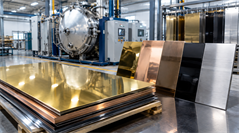
PVD stands for Physical Vapour Deposition. The process vaporises a coating material inside a vacuum chamber, then deposits it as a thin, adherent layer across the stainless steel surface. Chamber pressure and temperature stay controlled throughout the cycle, keeping the deposited film even from sheet to sheet. Architects and fabricators working with decorative stainless steel sheets choose from gold, black, bronze and other metallic tones for cladding, panelling and fixtures, selecting colour to suit a project brief rather than settling for raw metal.
How PVD Coating Creates Durable Decorative Surfaces
Decorative appeal only holds value if the surface survives daily use. Several process controls link directly to long-term performance.
- Strong surface adhesion: Vacuum deposition bonds the coating at a molecular level, so it does not sit as a loose film that can be peeled or lifted away.
- Resistance to everyday wear: A correctly applied layer holds up against handling and contact better than an untreated decorative finish exposed to the same conditions.
- Colour stability: When the coating material and process are matched to the intended environment, PVD finishes hold their tone without noticeable fading over normal service life.
- Scratch and abrasion resistance: The coating will resist normal contact with hands, trolleys and cleaning equipment, but is not scratch-proof under sharp or abrasive impact.
- Consistent appearance: Large sheet runs produce a uniform finish because of controlled chamber conditions, avoiding patchy color between panels.
- Decorative flexibility: Different coating materials can be combined with a brushed, mirror or patterned substrate to achieve a range of visual effects from a single base material.
Decorative Applications of PVD-Coated Stainless Steel
PVD-coated stainless steel appears across settings where metallic appearance and daily contact resistance both carry weight, from transport hubs to hospitality interiors.
Wall and Column Cladding
Coated sheets bring a consistent metallic tone to large vertical surfaces while standing up to the incidental contact common in busy corridors and lobbies.
Lift and Elevator Interiors
Confined lift cabins see constant hand contact and cleaning cycles, so a coating that resists dulling keeps the interior looking presentable between refurbishments.
Decorative Panels
Feature panels rely on colour uniformity across joins, and controlled deposition keeps adjacent sheets matched even when produced in separate runs.
Hotel and Restaurant Interiors
Reception counters and dining fixtures face frequent wiping and handling, conditions where a stable coating outperforms an untreated decorative finish over time.
Partitions and Screens
Screens dividing open floor plans stay visible from multiple angles, so an even, glare-controlled finish matters as much as colour choice.
Furniture and Cabinetry Details
Handles, trims and accent strips get touched constantly, making wear resistance a practical requirement rather than a cosmetic preference.
Retail and Commercial Interiors
Shelving edges and counter fronts in retail settings take daily traffic, where a durable coating helps maintain a consistent storefront appearance.
Architectural Features
Signage frames, canopy trims and facade accents stay exposed to handling, benefiting from a coating chosen for the specific setting.
Factors That Affect PVD Coating Performance
Coating outcomes depend on more than the deposition step itself. The base sheet, preparation and process control together decide how the finish performs.
- Quality of the stainless steel substrate
- Surface preparation before coating
- PVD coating material selected
- Coating thickness and process control
- Brushed, mirror or patterned surface texture
- Intended application and contact level
- Cleaning and maintenance practices
Coating performance depends on the complete surface-treatment process, not on PVD alone. StainlessInox International FZCO processes decorative stainless steel sheets for architectural projects across the GCC, MENA, Europe and Asia.
Choosing the Right PVD Finish for Decorative Surfaces
Match the finish to the interior colour scheme before selecting a base texture. Consider glossy, matte, brushed or patterned surfaces, since each reflects light differently under the same coating tone. Evaluate lighting carefully, as reflective finishes can shift how a colour reads across a room. Factor in expected handling, cleaning frequency and traffic levels. Select the coating and stainless steel specification according to what the application demands.
Conclusion
PVD coating gives stainless steel a range of colours and finishes while adding a layer built to handle routine use. The outcome depends on substrate quality, surface preparation, coating selection and ongoing maintenance working together, not on any single step. Specified correctly, stainless steel PVD coating for decorative surfaces holds its appearance well beyond the point where an untreated surface would start to show its age.