Industry Standards and Specifications
This alloy is formally defined across four major numbering and specification systems. ASTM covers 304 grade stainless steel across multiple product forms, with A240 for plate, sheet, and strip, A276 for bars, A312 for pipes, and A554 for welded mechanical tubing. ASME adopts the same chemistry under specification SA-240, making the material eligible for Boiler and Pressure Vessel Code applications. UNS S30400 is the alloy’s designation in North America. European buyers refer to the same grade as EN 1.4301, designated X5CrNi18-10 under EN 10088-2, while Japanese mills supply it as SUS 304. Carbon limits differ slightly between ASTM and EN, so confirm certification before ordering.
Chemical Composition of Stainless Steel 304 Grade
Chromium and nickel are the primary elements that give grade 304 stainless steel its main properties. The figures below follow ASTM A240 limits for UNS S30400.
| Element | Composition (%) |
| Chromium (Cr) | 18.0–20.0 |
| Nickel (Ni) | 8.0–10.5 |
| Carbon (C) | 0.08 max |
| Manganese (Mn) | 2.00 max |
| Silicon (Si) | 0.75 max |
| Phosphorus (P) | 0.045 max |
| Sulfur (S) | 0.030 max |
| Nitrogen (N) | 0.10 max |
| Iron (Fe) | Balance |
EN 1.4301 caps carbon at 0.07% and narrows chromium to 17.5–19.5%, so a heat that passes ASTM will not always meet the European limits.
Mechanical & Physical Properties of SS 304
Annealed material sets the baseline for design calculations. Cold working raises strength well beyond these minimums, so a hard-rolled coil will test far higher than the values shown. ASTM A240 fixes the mechanical minimums, and the physical figures represent annealed properties at room temperature.
| Property | Value |
| Tensile Strength (Min.) | 515 MPa (75 ksi) |
| Yield Strength, 0.2% Proof (Min.) | 205 MPa (30 ksi) |
| Elongation in 50 mm (Min.) | 40% |
| Hardness (Max.) | 201 HBW / 92 HRB |
| Density | 8.00 g/cm³ |
| Melting Range | 1400–1450 °C |
| Elastic Modulus | 193 GPa |
| Thermal Conductivity at 100 °C | 16.2 W/m·K |
| Specific Heat (0–100 °C) | 500 J/kg·K |
| Coefficient of Thermal Expansion (0–100 °C) | 17.2 µm/m·°C |
| Electrical Resistivity | 720 nΩ·m |
| Magnetic Response | Non-magnetic in the annealed condition |
Advantages of SS 304 Grade
Fabricators prefer this alloy for its practical advantages on the shop floor rather than just its written specifications. Four key properties account for most specification decisions across industries.
- Excellent Weldability – Standard welding methods join 304 without filler complications, and post-weld annealing restores corrosion resistance when sensitization becomes a concern.
- Outstanding Formability – Deep drawing is possible without intermediate annealing, making the alloy ideal for sinks, cookware, tanks, and formed components.
- Long-Term Durability – A self-healing chromium oxide layer reforms quickly after surface scratches, maintaining corrosion resistance during service.
- Superior Hygiene – Its non-porous surface resists bacterial growth and withstands steam cleaning, detergents, and chlorine-free sanitizers, making it ideal for food and beverage applications.
Available Forms of Stainless Steel 304
Mills manufacture SS 304 in numerous product forms to meet different industrial requirements.
- Pipes – ASTM A312 seamless and welded pipes ranging from 1/8″ to 30″ NB for process, chemical, and water applications.
- Tubes – ASTM A213 and A554 tubes available from 6 mm to 101.6 mm OD with wall thicknesses starting at 0.5 mm.
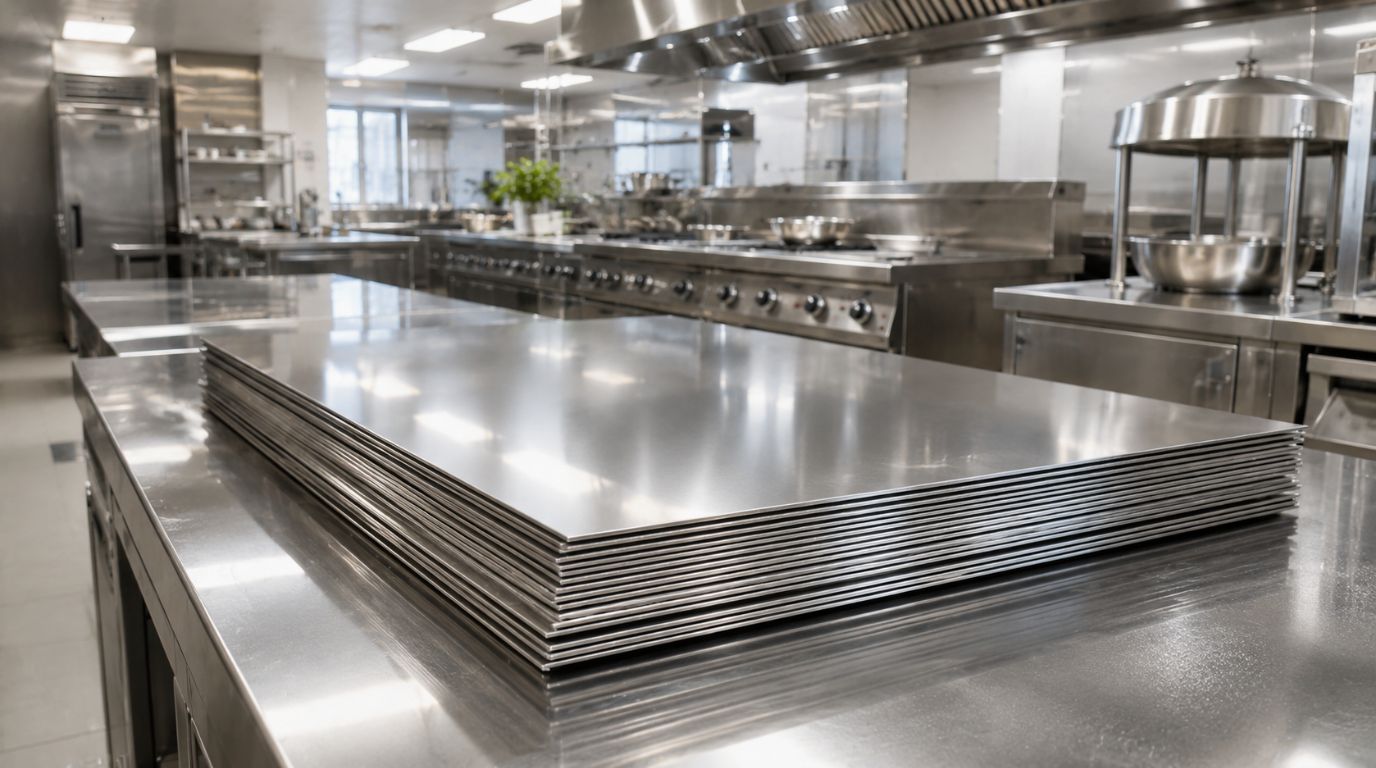
- Sheets – Cold-rolled sheets from 0.3 mm to 6 mm in 2B, BA, No.4, and Mirror finishes.
- Plates – Hot-rolled plates above 6 mm thickness up to 100 mm for pressure vessels and structural fabrication.
- Bars – ASTM A276 round, square, flat, and hex bars used in machining applications.
- Angles – Equal and unequal angles from 20 × 20 mm to 100 × 100 mm for structural support.
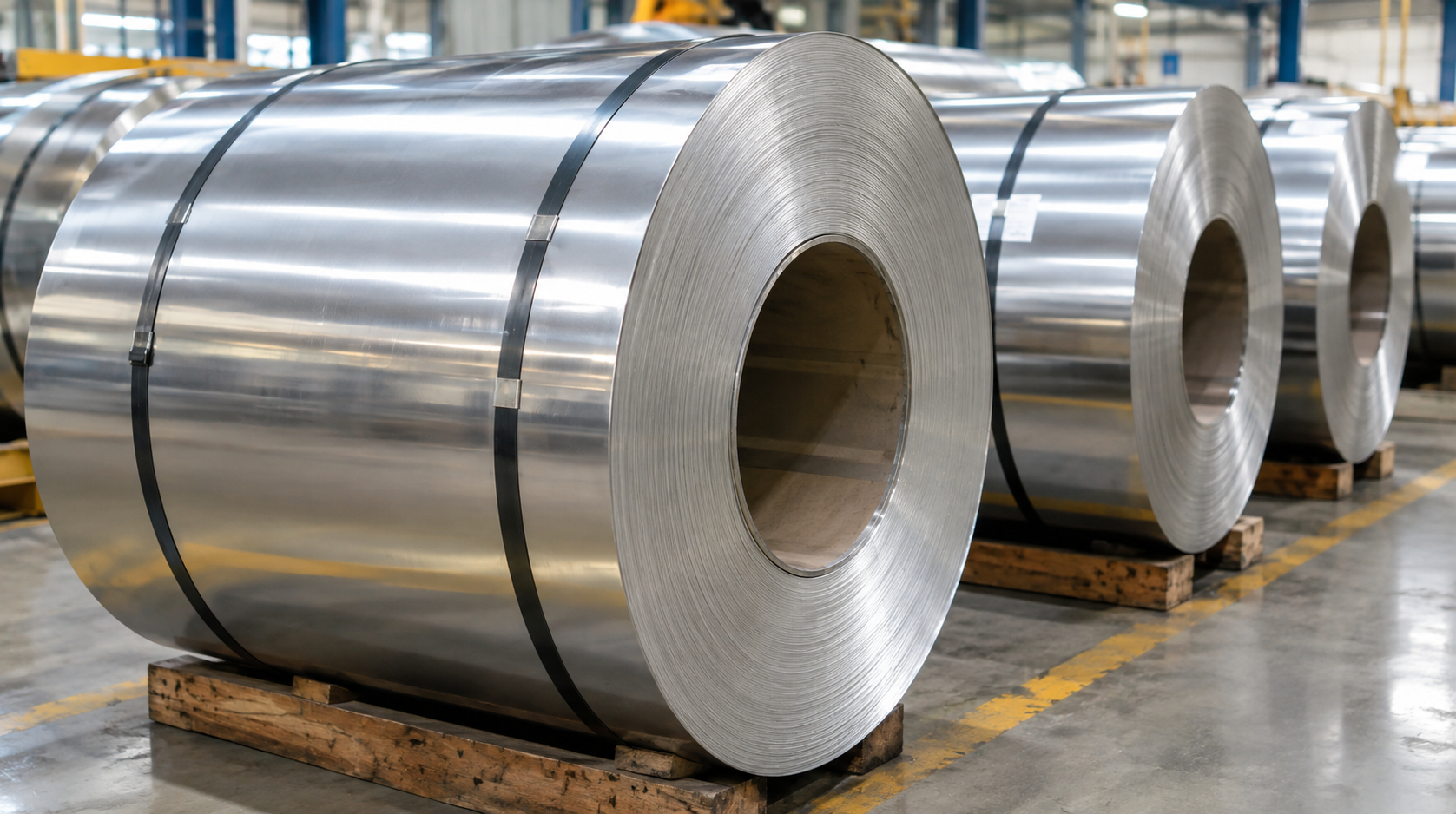
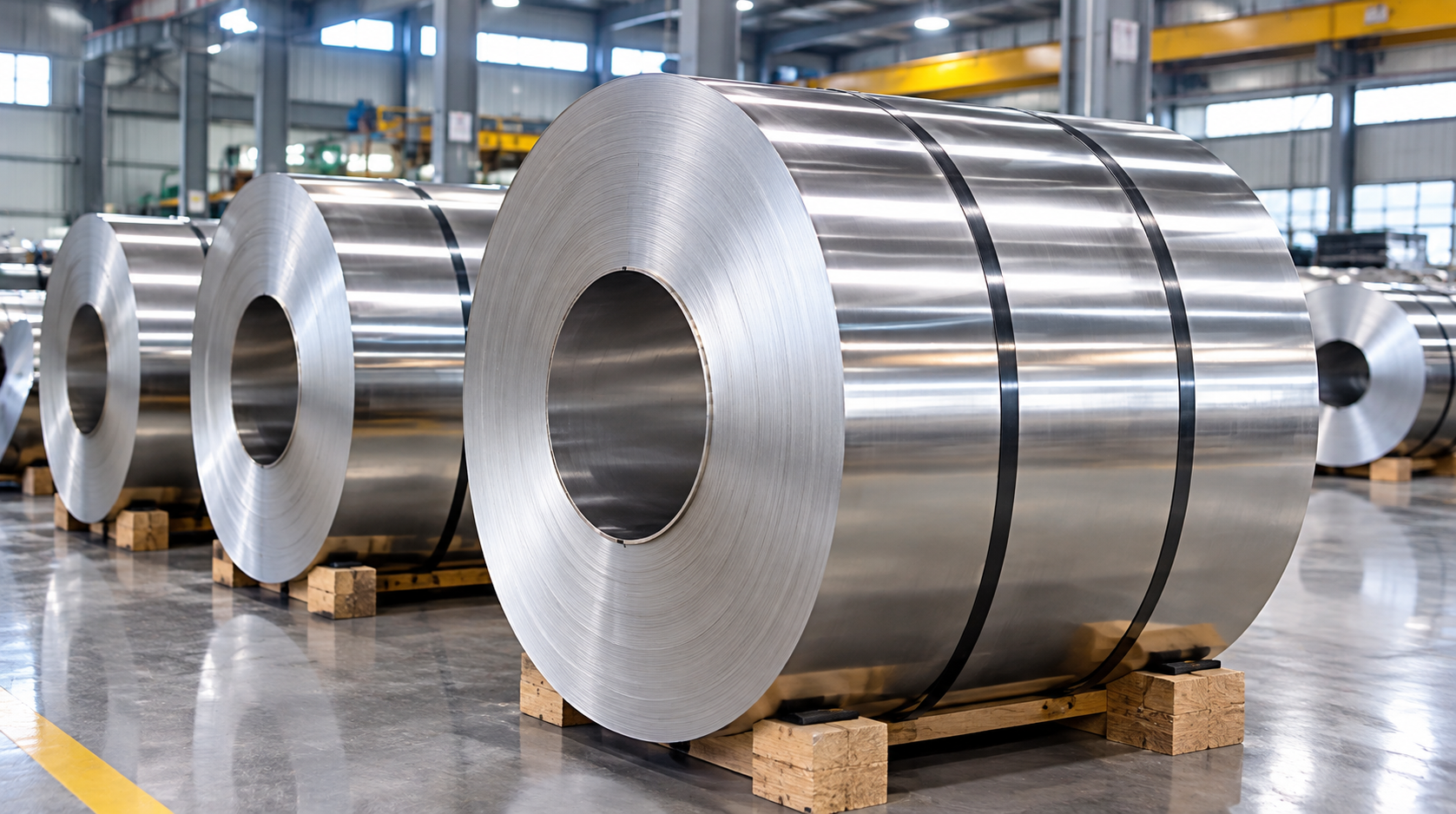
- Coils – Full-width and slit coils up to 2000 mm wide for roll forming and stamping.
- Fittings – ASTM A403 WP304 elbows, tees, reducers, and stub ends matching standard pipe schedules.
How to Choose the Right Stainless Steel 304 Product for Your Application
Selecting the right SS 304 product depends on the operating environment, fabrication process, and required surface finish.
Assess the Corrosive Environment
Chloride-rich environments such as coastal regions, swimming pools, and marine applications can cause pitting corrosion. For these conditions, SS 316 is generally the preferred choice.
Match the Grade Variant to Welding Needs
For heavy welded fabrications, choose 304L, which has a lower carbon content (0.03% max) to reduce carbide precipitation during welding.
Choose the Right Thickness and Form
Select coils for continuous production, sheets for fabrication work, and plates for heavy structural applications requiring higher thickness.
Confirm the Surface Finish
Surface finish affects both appearance and corrosion resistance. A 2B finish suits industrial equipment, while No.4 and Mirror finishes are preferred for architectural and decorative applications.
Verify Material Certification
Always request an EN 10204 3.1 Mill Test Certificate (MTC) to verify the chemical composition, mechanical properties, and applicable ASTM standards.
Maintenance Tips for Stainless Steel 304
Maintain SS 304 by cleaning it regularly with warm water and a mild detergent. Rinse thoroughly and dry with a soft cloth to prevent water spots. Avoid steel wool, hydrochloric acid, and chloride-based cleaners, as they can damage the passive oxide layer. Use dedicated stainless steel tools during fabrication to prevent carbon steel contamination. After heavy machining or welding, passivation using nitric acid helps restore corrosion resistance.
FAQs
What are the main properties of Stainless Steel 304 Grade?
SS 304 is an austenitic stainless steel containing approximately 18% chromium and 8% nickel. It offers a minimum tensile strength of 515 MPa, 40% elongation, excellent corrosion resistance, and oxidation resistance up to approximately 870 °C in intermittent service.
What is the difference between Stainless Steel 304 and 316 Grade?
The primary difference is molybdenum content. Stainless Steel 316 contains 2–3% molybdenum, providing significantly better resistance to chloride-induced pitting corrosion than SS 304, making it suitable for marine and coastal environments.
What standards apply to Stainless Steel 304 Grade?
Stainless Steel 304 is commonly manufactured according to ASTM A240, ASTM A276, ASTM A312, and ASTM A403 standards. It is designated as UNS S30400, EN 1.4301, X5CrNi18-10, and SUS 304 depending on the applicable international standard.