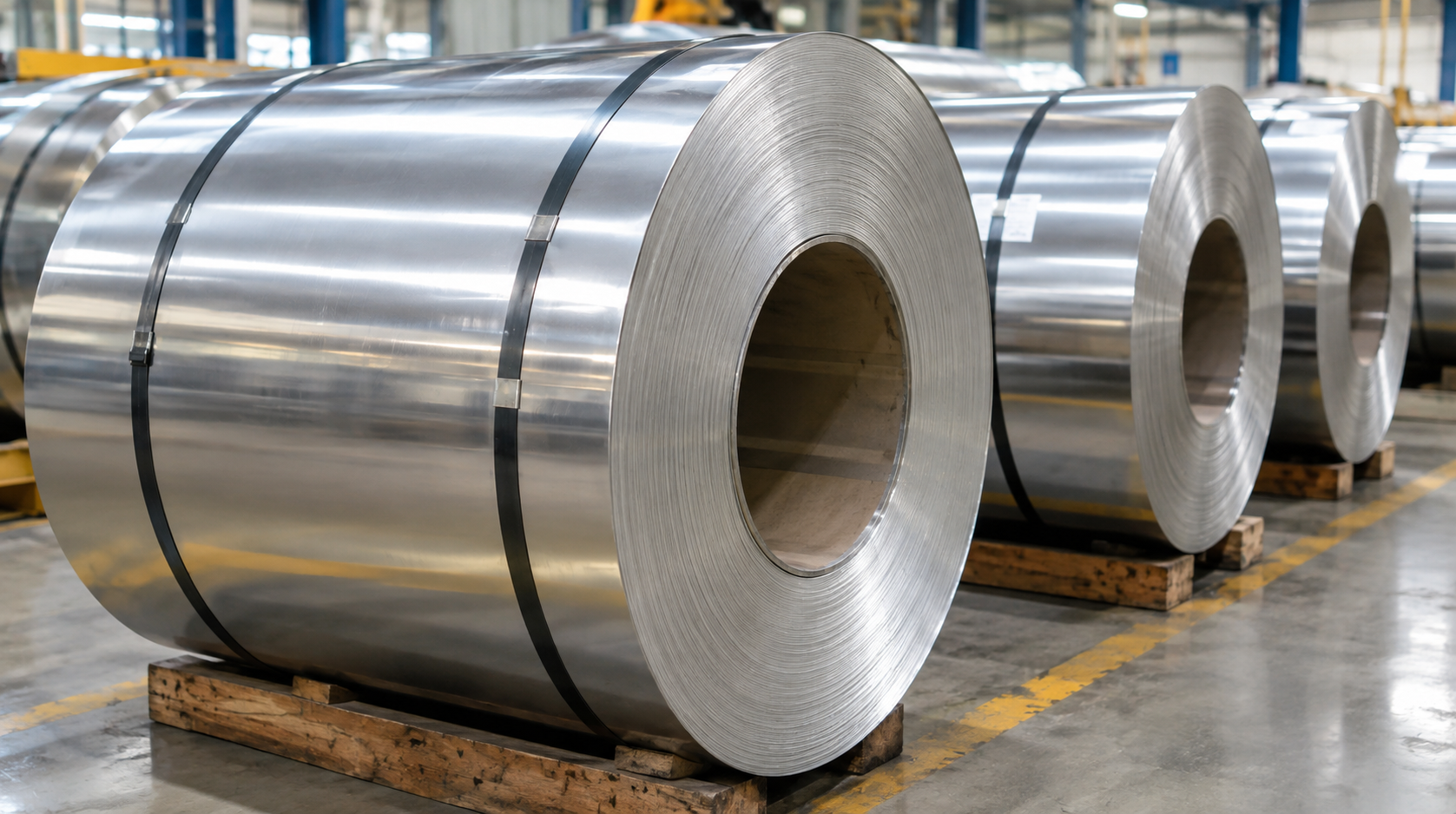
When we talk about a particular grade of stainless steel for home appliances, Stainless Steel 304 appears in the top of the list. Stainless Steel 304 sheet is the most versatile and widely used among all the available stainless steels.
Features and Specifications of Grade 304 Stainless Steel
Its mechanical properties, chemical composition, weldability, corrosion oxidation resistance makes it the best-all-round performance stainless steel at a relatively low cost. Stainless Steel 304 sheet is a 300 T Stainless steel austenitic. It contains minimum 18% chromium and 8% nickel, with a combination of 0.08% carbon. So it is also known as Chromium-Nickel austenitic alloy.
Types of Stainless Steel 304 Sheet
Stainless Steel 304 plates are categorized in two types on the basis of carbon content. Grade 303L is low carbon version of 304. It does not require post-weld annealing and hence it is extensively used in heavy gauge components. Grade 304H finds application at elevated temperatures with its higher carbon content.
Common Applications of SS 304 Grade
This Stainless Steel 304 sheet is applicable in a wide variety of home, commercial, stainless steel pipes and a tons of other applications. So, let’s know each application in detail.
SS 304 Grade Stainless Steel Pipes
The Stainless Steel 304 sheet is majorly used in the manufacturing of high quality Stainless Pipes.
Stainless Steel Pipes made up of Type 304 sheet is used mainly for transportation of fluids or gases. They are used to protect electrical wires.
Stainless Steel Pipes are used for corrosive or high-temperature applications and high-pressure environments. These stainless steel pipes also find their application in sanitary tubing.
Commercial
Stainless Steel 304 sheet is one of the most familiar and widely used alloys in the stainless steel family. On a commercial level, stainless steel 304 sheet is used in tanks and containers for a large variety of liquids and solids.
Food Industry
Used in food processing equipments, like in beer brewing, wine making and milk processing. The Stainless Steel 304 sheet is highly suitable for manufacturing dairy equipments such as containers, homogenizers, sterilizers, milking machines, and storage including piping, valves, and milk trucks.
The citrus and fruit juice industry also used the Stainless Steel 304 sheet for their needs like the crushing, preparation, storage, etc.
Domestic Tools
Due to its corrosive resistant property, Type 304 sheet is used for refrigerators, milk and cream dispensers, sinks, tabletops, stoves, and numerous other utensils such as pan, pots and other cooking appliances.
Other Applications
The type 304 grade stainless steel is also used in Architectural paneling, trimming and railing including chemical containers, heat exchangers, woven or welded screens for mining, water filtration, dyeing industry as well as marine environment. For its slightly higher wear resistance than type 316 grade, type 304 is also used for nuts, bolts, and screws.
FAQ’S
1. What is 304 grade stainless steel?
304 grade stainless steel is an austenitic stainless steel alloy containing chromium and nickel, known for its corrosion resistance, durability, and versatility across various industries.
2. What is the chemical composition of SS 304 grade?
SS 304 typically contains 18–20% chromium and 8–10.5% nickel, along with iron, carbon, manganese, and other elements within specified limits.
3. What are the main properties of grade 304 stainless steel?
Grade 304 stainless steel offers good corrosion resistance, excellent formability, weldability, and strength, making it suitable for numerous fabrication and manufacturing applications.
4. Where is stainless steel 304 grade commonly used?
Stainless steel 304 grade is widely used in food processing equipment, kitchen utensils, storage tanks, architectural components, chemical equipment, and industrial machinery.
5. What is the difference between SS 304 and SS 316 grade?
SS 304 provides good general-purpose corrosion resistance, while SS 316 contains molybdenum, which improves resistance to chlorides and many corrosive environments.