Stainless steel wire mesh is an extremely versatile material made from interlaced or welded wires of stainless steel. Its highly valuable combination of properties has resulted in an ever-increasing demand for this material within industries. The material is used in everything, from basic home appliances to complex industrial systems all around the world. Stainless steel wire mesh is an outstanding choice for a wide range of applications due to its durability, corrosion resistance and versatility.
What is Stainless Steel Mesh?
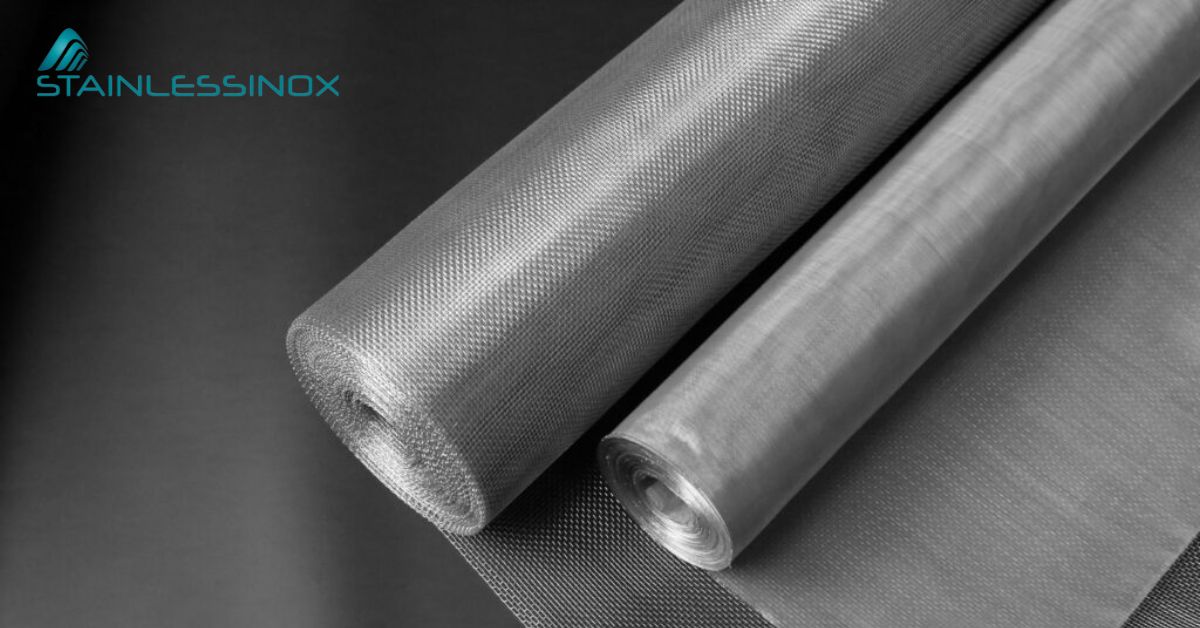
Stainless steel wire mesh is simply a grid-like material formed by connecting stainless steel wires. It can be made in two main ways welded wire mesh is created by resistance-welding the wires at their intersections, forming rigid, square, or rectangular openings. Woven wire mesh is made much like fabric, with wires interlaced over and under each other. The core material is a steel-chromium alloy that prevents rust. Common alloys include 304 stainless steel mesh (the most popular general-purpose grade) and 316 stainless steel mesh (which is more resistant to chlorides and acids). Other grades, such as SS 310, are used at extremely high temperatures. Manufacturers can adjust the mesh sizes (the number of openings per inch), wire diameters and weave patterns to meet specific application requirements, offering the material a wide range of applications.
Properties of Stainless Steel Mesh
The unique makeup of stainless steel gives the metal mesh for filtration and other applications several strong advantages. These properties of stainless steel mesh explain its wide industrial wire mesh applications.
- High corrosion resistance: It is the most significant property. Stainless steel contains chromium, which creates a passive, rust-proof coating on the surface. This makes the mesh extremely resistant to rust and chemical assault. It works exceptionally well in chemical factories, marine environments, with salt water and outdoor settings.
- Excellent Tensile Strength and Durability: The material is very strong and tough. SS wire mesh can withstand significant pull forces tensile strength and mechanical stress without breaking or losing its shape. This durability ensures a long service life, even in demanding industrial wire mesh applications where it might bear heavy loads.
- Heat and Oxidation Resistance Stainless steel: It can handle extremely high temperatures without weakening or being damaged by oxidation, the process of combining with oxygen. The quality makes it perfect for equipment like heat exchangers, ovens and furnaces where high temperature operations are common.
- Precise filtration and uniform mesh openings: The manufacturing process, particularly for woven wire mesh, results in highly consistent and uniform spaces. This precision is critical for industrial filtration, sieving, and screening processes that require the exact separation of materials based on size.
Types of Stainless Steel Wire Mesh
The way the wires are joined defines the different SS wire mesh types available for various stainless steel mesh uses.
- Woven Wire Mesh: This is made like cloth on a loom. Different patterns exist: plain weave (wires cross over/under), twill weave (wires cross over two and under two), and Dutch weave (thicker warp wires and smaller, closer weft wires for fine filtration). It is known for high precision in filtration.
- Welded Wire Mesh: The wires are spot-welded together at each cross-section. It results in an extremely strong, stiff sheet that holds its shape well under strain. It is commonly used for construction and security fencing.
- Knitted Wire Mesh: Made by looping wire like knitting yarn, this mesh is very flexible and springy. It is often used for demisters and mist eliminators to trap liquid droplets and for vibration dampening.
- Crimped wire mesh: The wires are bent or crimped before being woven together. The crimps firmly secure the wires, resulting in a very strong, sturdy construction with fixed openings, suitable for heavy-duty screening.
- Hexagonal/chicken wire mesh: This mesh’s twisted wires produce six-sided, honeycomb-like holes. It is commonly used for light containment, insulating support, and basic fencing.
Why Choose Stainless Steel Mesh For Your Application
Selecting stainless steel wire mesh offers clear benefits over other metal or synthetic materials. Its specialised characteristics deliver long-term value and reliability.
- Superior corrosion and heat resistance: Using grades such as 316 stainless steel mesh protects the equipment from chemicals, moisture, and extreme temperatures. This considerably extends the product’s life in tough operating conditions.
- High Strength and Long Service Life: Stainless steel’s intrinsic strength implies that it tears, stretches and breaks less easily. It results in fewer replacements and reduced downtime, making SS wire mesh a cost-effective long-term investment.
- Excellent filtration and precision performance: The ability to precisely regulate the wire diameter and mesh size assures consistent performance. It is essential for operations such as particle separation in food or pharmaceutical manufacturing.
- Versatility Across Industries: From small particle filtration to heavy-duty architectural screens, the material may be designed for practically any application. Its adaptability is a fundamental reason for its growing demand.
Common Uses of Stainless Steel Mesh
The combination of corrosion resistance, strength, heat tolerance and fine filtration capability makes SS wire mesh suitable across many different sectors. These wide stainless steel mesh uses demonstrate the material’s true adaptability.
- Filtration and Separation: Metal mesh for filtration is its most common use. It is used in chemical plants as filtration screens, in water treatment systems, and in refineries to separate liquids and solids. Fine woven wire mesh is essential for precision sieving in laboratories.
- Construction and Architectural: Strong welded wire mesh is used to reinforce concrete slabs and walls. Architecturally, it is becoming popular for modern building facades, safety barriers, decorative panels, and railing infills due to its sleek look and durability.
- Food and beverage processing: 304 stainless steel mesh is non-toxic and easy to sanitise, making it perfect for food handling conveyor belts, drying trays, basket strainers, and insect screens in processing areas.
- Marine and automotive: 316 stainless steel mesh is preferred in marine applications for vents and strainers because of its superior salt resistance. In vehicles, it is used for exhaust system components and air intake filters due to its heat tolerance.
- Security & Safety: Due to its strength, stainless steel wire mesh is used to make protective window screens, machine guards, and security fencing that can withstand cutting and impact.
- Agriculture & Pest Control: The mesh is used to create long-lasting farm screens, grain silos, and pest and rodent barriers that still allow the airflow.
Conclusion
Stainless steel wire mesh is an important material due to its exceptional characteristics. The key benefits, including corrosion resistance, high strength, and precision, ensure reliable performance under conditions when other materials fail. SS wire mesh is used for a wide range of applications, including crucial industrial filtration and elegant architectural designs. To ensure best performance and value, choose the appropriate quality, such as 304 or 316 stainless steel mesh, as well as the mesh type. It remains the preferred alternative for situations requiring durability and accuracy.