Stainless steel pipes, commonly referred to as SS pipes, are vital for modern industry, offering excellent reliability for fluid and gas transportation in challenging environments. Its advanced engineering features make it the material of choice for applications that need long-lasting structural integrity and contamination management. The substance is highly dependable. Understanding the various kinds of stainless steel pipes and their unique features is essential for effective project implementation across various industries.
What Are Stainless Steel Pipes?
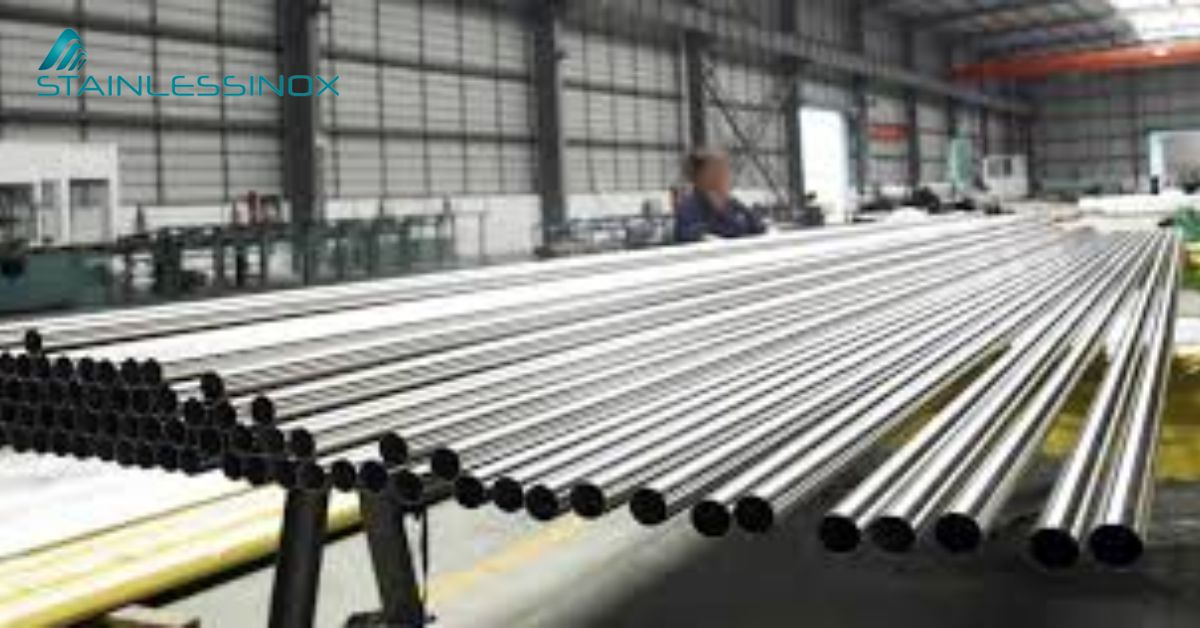
A stainless steel pipe is essentially a tubular product made from a steel alloy that contains a minimum of 10.5% chromium. The main alloying elements usually include chromium and often nickel and molybdenum, which determine the grade and properties. It is the chromium that reacts with oxygen to form an ultra-thin, invisible passive layer on the surface. This protective film self-repairs if scratched, providing the celebrated corrosion resistance. These SS pipes are manufactured in many forms, including the familiar round shape, as well as less common square and rectangular profiles for structural uses.
Types of Stainless Steel Pipes
There are several main ways that stainless steel pipes are produced, with each method leading to a product optimized for different jobs and budget requirements. Choosing the right production method is critical for safety, and cost-effectiveness.
- Seamless Pipes: Seamless pipes are created from a solid steel billet. It is heated, and then pushed over a piercing rod to produce a hollow tube. In this process, the pipe has no welded seams. As they do not have a weak point, it is perfect for high-pressure uses, such as oil and gas lines or boiler systems. Stainless steel seamless pipes provide maximum consistency.
- Welded Pipes: Welded SS pipes are manufactured by rolling a flat steel strip or plate into a tubular shape, and subsequently joining the edges by means of a weld. Welded pipes, in comparison with seamless pipes, are produced at a lower cost. ERW, EFW, and SAW are some of the common types. It is used for less critical applications with low pressures.
- Instrumentation/Hydraulic Tubes: These tubes have smaller diameters and are manufactured to very tight tolerances. The tubing is used in systems that measure or control fluid flow. The key feature of these pipes is their high accuracy. These tubing systems are fundamental to precision applications that require accurate instrumentation and hydraulic control lines.
- Structural & Mechanical Pipes: The category includes all those pipes and tubes that are not used to convey fluids but to provide support and a framework. It is mostly in square or rectangular in cross-section. Its uses include general construction, frames of vehicles and ornamental architectural applications like stair railings.
Common Stainless Steel Grades
The specific blend of alloys used in an SS pipe dictates its grade, and each grade is tailored for different operating conditions. Understanding the grade is necessary for engineering success. Getting the right grade is very important.
- SS 304 / 304L: This is the most popular, truly general-purpose grade. It offers excellent weldability and corrosion resistance in non-saline environments. SS 304 pipes are extensively used in the food industry, kitchens, and architectural trim. The ‘L’ version has lower carbon for better post-weld corrosion resistance.
- SS 316 / 316L: The addition of molybdenum makes this grade superior to 304, especially for chloride resistance. This means SS 316 pipes are standard in marine environments, chemical processing, and medical equipment. It fights pitting corrosion effectively.
- SS 310: With its high nickel and chromium content, this grade provides excellent resistance to heat and oxidation. SS 310 is mainly reserved for high-temperature service applications, such as in furnaces and heat treatment equipment.
- SS 321: This is a titanium-stabilised grade that prevents chromium carbide precipitation, which can happen when stainless steel is exposed to high heat. This makes it ideal for prolonged heat applications in the 425°C to 815°C range.
- Duplex & Super Duplex: These grades have a mixed microstructure of ferrite and austenite. It provides high strength along with exceptional corrosion resistance. They are specified for aggressive environments, especially offshore and chemical processing, where maximum performance is non-negotiable.
Characteristics of Stainless Steel Pipes
The inherent properties of the stainless steel alloy give these pipes a set of unmatched functional advantages over other pipe materials. They are a smart long-term investment.
- Corrosion Resistance: The self-healing chromium oxide layer provides outstanding corrosion resistance against water, acids, and atmospheric conditions. This characteristic ensures the integrity of the pipe and the purity of the medium it carries.
- High Strength & Durability: Stainless steel pipes are inherently strong, offering excellent yield and tensile strength. Their durability means they can handle significant internal pressure and external stresses with a very low risk of catastrophic failure. They last a very long time.
- Heat and Fire Resistance: These pipes retain their structural strength even at elevated temperatures. It is non-combustible and has good fire resistance, which is one of the key safety factors in many industrial applications.
- Recyclability and Sustainability: Stainless steel is a 100% recyclable material without any quality degradation. SS pipes improve sustainability in construction, and industry by reducing waste and the need for virgin materials.
Applications of Stainless Steel Pipes
The wide-ranging properties of SS pipes mean they have been adopted across nearly every major industrial sector worldwide. Their reliability is trusted everywhere.
- Oil and Gas Pipelines: Upstream and midstream operations use specific grades to carry crude oil, natural gas and refined petroleum products. It must bear enormous pressures. Stainless steel pipes are critical components in many demanding fluid-handling systems.
- Chemical & Petrochemical Plants. The resistance to various acids and bases makes them the material of choice for chemical processing. Welded SS pipes and seamless versions are used extensively throughout these facilities.
- Marine & Offshore Structures, especially SS 316 pipes and Duplex grades, are chosen for submerged pipelines and platforms. They resist the corrosive effects of saltwater, ensuring operational security.
- Food and Beverage Processing: A non-contaminating and easy-to-clean surface is essential for hygiene. It is used to carry liquids and provide a framework in cleanroom environments.
- Water supply and treatment systems: Stainless steel pipes are used in municipal water lines and wastewater plants to prevent pollution and withstand water treatment chemicals. It makes sure clean drinking water is delivered.
- Construction, Railings and Architectural Elements: Used for both load-bearing and aesthetic purposes, especially where exposed metal is preferred. It offers a clean appearance and is highly resistant to weathering.
- Boilers, Heat Exchangers and Condensers: Its capacity to withstand high temperatures and steam makes this pipe indispensable in power-generating and HVAC systems.
Why Stainless Steel is the Go-To Choice for Piping Systems
Choosing stainless steel for a plumbing system is an easy choice based on performance and durability. The material is well-known for its excellent durability and ability to tolerate extreme operational pressures, and temperatures without failure. Most importantly, it provides outstanding corrosion resistance, which prevents material degradation and contamination of the transported media. This versatility means stainless steel pipes are used everywhere from city water lines to complex chemical processing facilities.
Conclusion
Stainless steel pipes provide quality, safety, and durability to cater to the demands for engineered systems in all parts of the world. The toughness, excellent corrosion resistance, and diverse varieties make them capable of handling nearly any industrial task. It is this reliability that makes them an economically viable choice for crucial infrastructure. From servicing SS 304 pipes in food processing plants to heavy-duty SS 316 pipes offshore, stainless steel is the standard. For critical operations, secure this robust solution. Request a quote from the stainless inox company today.